
When Your Home Stops Fitting: Signs Your Space No Longer Matches Your Life
Your home should support the life you're living right now, not the one you had five or ten years ago. Knowing how to know if your home no longer fits your lifestyle comes down to recognizing both the obvious and the subtle signals that your space has stopped working for you.
According to Zillow research, 78% of sellers cite a major life event, such as a change in family size or a new job, as influencing their decision to move. But many homeowners wait far longer than they should, often ignoring quieter signs that their space has become a burden rather than a refuge. If any part of your daily routine feels harder than it should, it may be worth taking a close look at whether your home is still the right fit.
Life Changes That Quietly Outpace Your Living Space
The most obvious triggers for reconsidering your home are the big ones: a new baby, a divorce, retirement, a job relocation, or children leaving for college. These events shift your needs almost overnight. But life also changes in slower, less dramatic ways that are just as significant.
If you've taken on remote work, your home office setup may now be a kitchen table that doubles as a homework station and a dinner table. If your kids are getting older and their school district no longer makes sense from your address, you're adding stress to every school morning. If an aging parent has moved in, or you're planning ahead for your own mobility needs, a two-story house with a single bathroom might suddenly feel like the wrong design entirely.
The real issue is this: many people update their wardrobes, their careers, and their relationships as life evolves, but they leave their home untouched. When your house is still configured for a version of your life you're no longer living, it creates daily friction that adds up fast.

Emotional and Physical Clues Your Home Is Draining You
Sometimes the clearest signal isn't square footage or location. It's how you feel when you walk through the front door.
If you come home and feel cramped, uninspired, or even anxious rather than relaxed, pay attention to that. A space that once felt warm and inviting can lose its appeal as your tastes and needs shift. If you're no longer excited to come home, or you find yourself casually browsing real estate listings without any clear reason, those feelings are data points worth taking seriously.
Here are some of the most common emotional and practical clues people overlook:
- 1. You avoid certain rooms because they feel pointless or depressing
- 2. You've stopped hosting because your layout doesn't work for guests
- 3. Maintenance tasks feel relentless and joyless rather than satisfying
- 4. You feel a sense of relief when you stay somewhere else, like a hotel
- 5. You catch yourself calculating how much you spend each month keeping up a space you barely use
- 6. Rooms that were once full of energy now sit empty for weeks at a time
These aren't just passing moods. They tend to reflect a real mismatch between where you live and how you want to live. When the team at Sierra Home Transitions works with clients, they frequently hear that the emotional shift came long before any official decision to sell, and many families describe a quiet buildup of these feelings over months or even years before they reached out for home not working guidance.
Space Mismatch: Too Much, Too Little, or Just Wrong
Not every space problem looks the same. For some homeowners, the issue is having too much house. For others, it's not enough. And for a growing number of people, it's simply that the layout no longer makes sense.
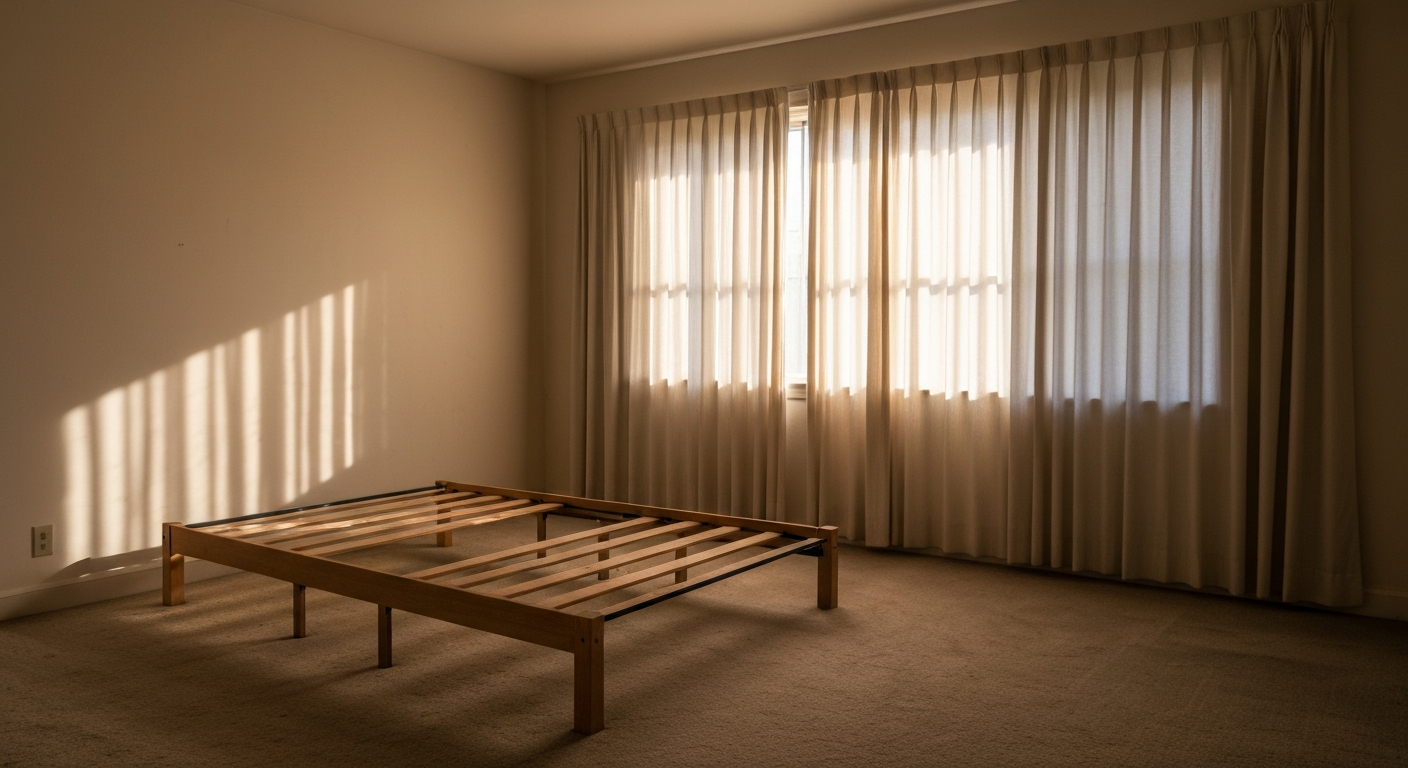
Too Much House
Empty bedrooms, formal dining rooms no one uses, and yards that take all weekend to maintain are classic signs of a home that has become more obligation than asset. This is especially common for empty nesters who are maintaining 2,500 square feet of space for two people. The financial math is often hard to ignore as well. Utilities, insurance, property taxes, and upkeep on a larger home add up to thousands of dollars per year that could go elsewhere.
Too Little House
On the other end, a growing family or a shift to working from home can make a previously comfortable space feel unbearably tight. When you've run out of closet space, can't find a quiet corner for a video call, or your kids are sharing rooms in a way that creates daily conflict, the square footage is telling you something.
Wrong Layout
Layout mismatches are often the trickiest to identify because the house technically has enough space, it's just arranged incorrectly for your current needs. A single-story home might serve you far better if you're managing joint pain or preparing for aging in place. An open floor plan might have worked beautifully when the kids were young, but now you need walls and doors.
Location: When Your Neighborhood No Longer Works for You
Your home isn't just a building. It's a location, and location needs change too. If your preferred schools are now far away, your work added an hour of travel each way, or the local amenities no longer match your lifestyle, you may be living in the right house but the wrong place.
For retirees and older adults, this is especially relevant. A neighborhood that made sense during the commuting years might now feel isolated, far from medical care, or simply disconnected from the community and activities that matter most now. When stairs become harder to manage and the nearest grocery store is a 20-minute drive, the location is part of the problem just as much as the layout.

This is a core reason why professionals like Mike Giancanelli and Jennifer Yoder at Sierra Home Transitions Group specialize in helping seniors and their families think through not just whether to sell, but where to go next. If you want to understand their approach, you can read more on the about page to learn how their team combines real estate expertise with genuine care for the families they serve.
Things to Know
- 01.Major life events are the most common trigger for a move, but subtle changes in routine, energy, and space use are often earlier and more reliable warning signs.
- 02.Browsing real estate listings without a clear reason is a documented behavioral pattern that often precedes a serious decision to move.
- 03.Deferred maintenance is both a financial and emotional signal. When you stop investing in a home, it often means you've emotionally detached from it already.
- 04.The cost of maintaining a home that no longer fits can be significant, often exceeding $20,000 per year for utilities and upkeep on larger homes.
- 05.For seniors, the decision to downsize often goes better when it's made proactively rather than in response to a health crisis or family emergency.

When Downsizing Is the Right Answer, Not Just a Last Resort
Downsizing carries an unfair reputation as something people do reluctantly, only when forced by age or finances. In reality, many homeowners who downsize describe it as one of the most freeing decisions they ever made. Smaller spaces often mean lower costs, less maintenance, more time, and a better fit for how life actually looks today.
The question of what age is best for downsizing doesn't have a clean answer, but research and real-world patterns suggest that earlier is usually better than later. When you make the move while you're still healthy, mobile, and emotionally ready, you have far more control over the process. Waiting until a health event or financial pressure forces the issue tends to add stress and reduce your options.
If you are caring for an aging parent or going through an estate transition, the team at Sierra Home Transitions Group is equipped to help. With decades of experience and credentials that include Seniors Real Estate Specialist (SRES®) and Certified Probate Real Estate Specialist designations, Mike Giancanelli has been helping families navigate these transitions since 1990.
If you're noticing signs that your home not working for your current life, reaching out early gives you more time to make the right choice rather than a rushed one. The Sierra Home Transitions Group team is built specifically around helping families through these decisions with clarity and compassion.
Frequently Asked Questions
Q: What are the signs of an unhealthy home?
An unhealthy home often shows signs like persistent moisture, poor air quality, overcrowding, or a layout that creates daily physical or emotional stress. Visible mold, drafts from aging windows, outdated electrical systems, and a general sense of disrepair are physical red flags. On the emotional side, feeling anxious, drained, or trapped in your own space is a sign worth taking seriously.
Q: What is the best age to downsize your home?
There is no single best age, but most experts and real estate specialists suggest that downsizing in your early to mid-60s gives you the most flexibility and control over the process. Making the move while you are still healthy and proactive means you can choose the right community, negotiate effectively, and transition at your own pace.
Q: What are the signs of a neglected house?
A neglected house typically shows deferred repairs, peeling paint, outdated systems, overgrown landscaping, and a general lack of investment in upkeep. Beyond cosmetic issues, neglected homes often have aging HVAC systems, plumbing that hasn't been serviced, and roofs past their lifespan. Financially, deferred maintenance tends to compound over time.
Q: What makes your house look outdated?
Outdated homes are usually identified by older fixtures, worn flooring, dated color palettes, and layouts that no longer reflect how people live. Popcorn ceilings, brass hardware, carpet in every room, and closed-off kitchens are all visual signals that a home hasn't kept pace with modern living standards. These features can also affect resale value.
Q: How do I know if my home is no longer working for my lifestyle?
Your home is no longer working for your lifestyle when your daily routine feels unnecessarily difficult, your space feels misaligned with your current needs, or you feel emotionally detached from the place you live. Specific signs include unused rooms, a commute that has become unsustainable, a layout that doesn't support your physical needs, and a persistent sense of relief when you're somewhere else.
The Bottom Line on How to Know if Your Home No Longer Fits Your Lifestyle
Understanding how to know if your home no longer fits your lifestyle isn't always about one dramatic moment. It's usually a pattern of smaller signals, emotional, practical, spatial, and financial, that accumulate over time until they're hard to dismiss. Recognizing them early puts you in control of what comes next.
If any part of this article felt familiar, the right next step is to have an honest conversation with someone who understands both the real estate side and the human side of this decision. Sierra Home Transitions Group, with its tagline "Turning Homes Into Care," was built for exactly this purpose. Reach out to their team to start the conversation before circumstances make the choice for you.
Need Guidance Now?
If you're planning a move, helping aging parents, preparing to sell, or navigating a family real estate transition, Mike and Jennifer are here to help.